 Auto Parts Marketplace
OffroadSouq
An auto parts marketplace built on a year, make, model and part selector, with fitment, compatibility and returns answered before checkout.
Case study
Auto parts ecommerce development is a catalogue problem before it is a design problem. A shopper arrives holding a vehicle, not a product name, and leaves the moment the store cannot say whether a part fits. We have built two auto parts stores, one single-seller and one marketplace, and the decisions that mattered were all about fitment, search and trust.
The constraints we plan for in the first call, because they decide the architecture.
Returns in this sector are driven by wrong fitment far more than by changed minds. A store that lets someone add a brake disc to the cart without knowing the vehicle is creating a return. Make, model, year and engine have to narrow the catalogue before the product grid appears, and be remembered on the next visit.
Mechanics and informed buyers type an OEM or manufacturer part number and expect an exact hit. Default store search matches product titles, so it fails on the most valuable queries. Search has to index part numbers, cross-references and superseded numbers alongside names.
Supplier feeds arrive with inconsistent units, duplicate listings and missing images. Tens of thousands of SKUs make hand-editing impossible, so the build needs an import pipeline with validation, not a bulk upload button that silently publishes bad data.
When several sellers list on one storefront, the sellers become users too. They need their own listing tools, order views and payout visibility, and the buyer needs to see who is selling a part and how reliably they ship.
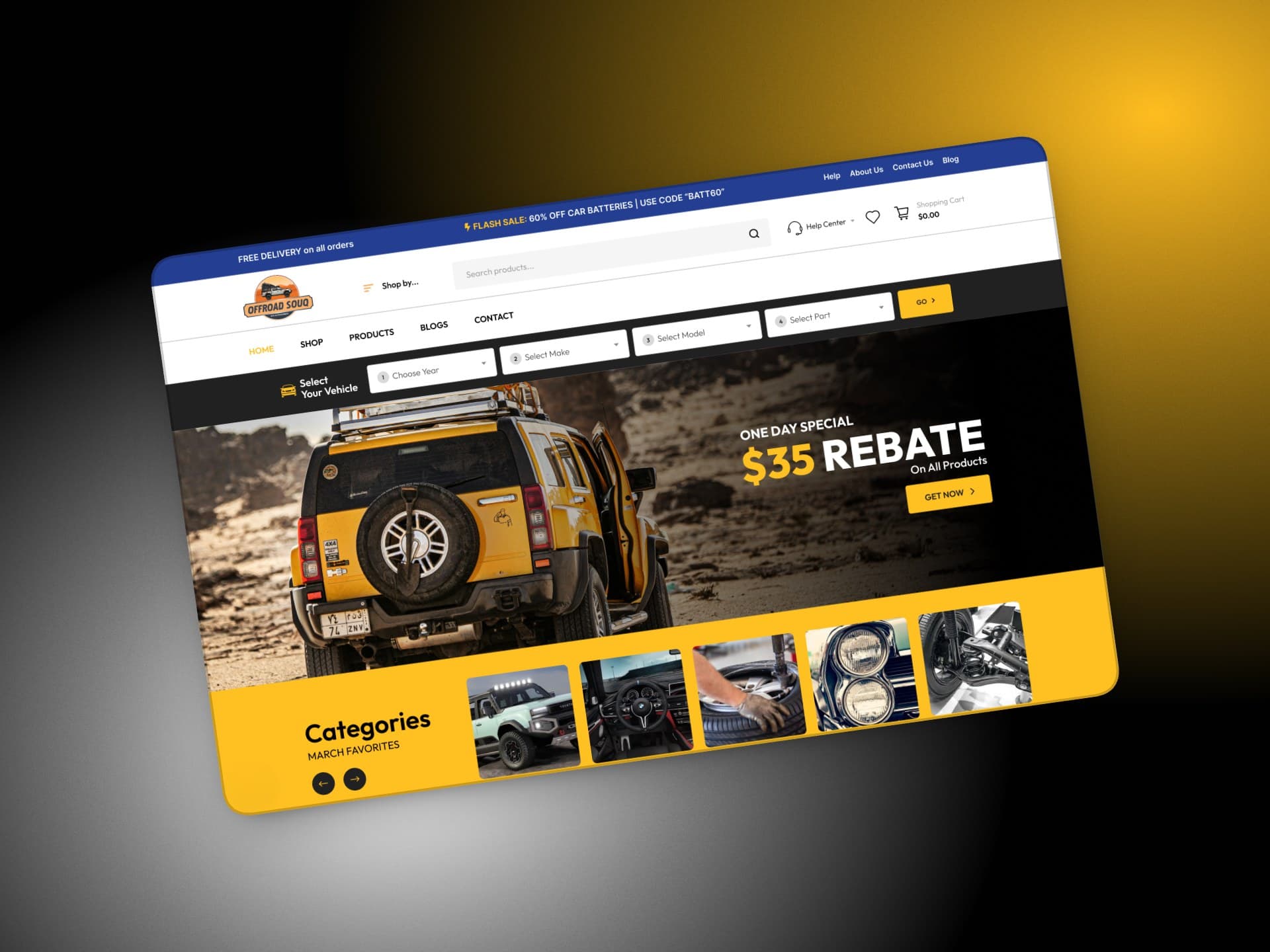
A garage selector for make, model, year and trim that filters every category page and carries through to checkout, with a clear message when a part is universal rather than vehicle-specific.
Search that matches OEM numbers, aftermarket equivalents and partial strings, with typo tolerance, and that returns the compatible alternatives when the exact part is out of stock.
Scheduled supplier or ERP imports with validation rules, a review queue for rejected rows and stock levels that update the storefront without a manual step.
Listing forms, bulk upload, order management and a seller profile page, with the commission and payout logic kept separate from the buyer-facing store.
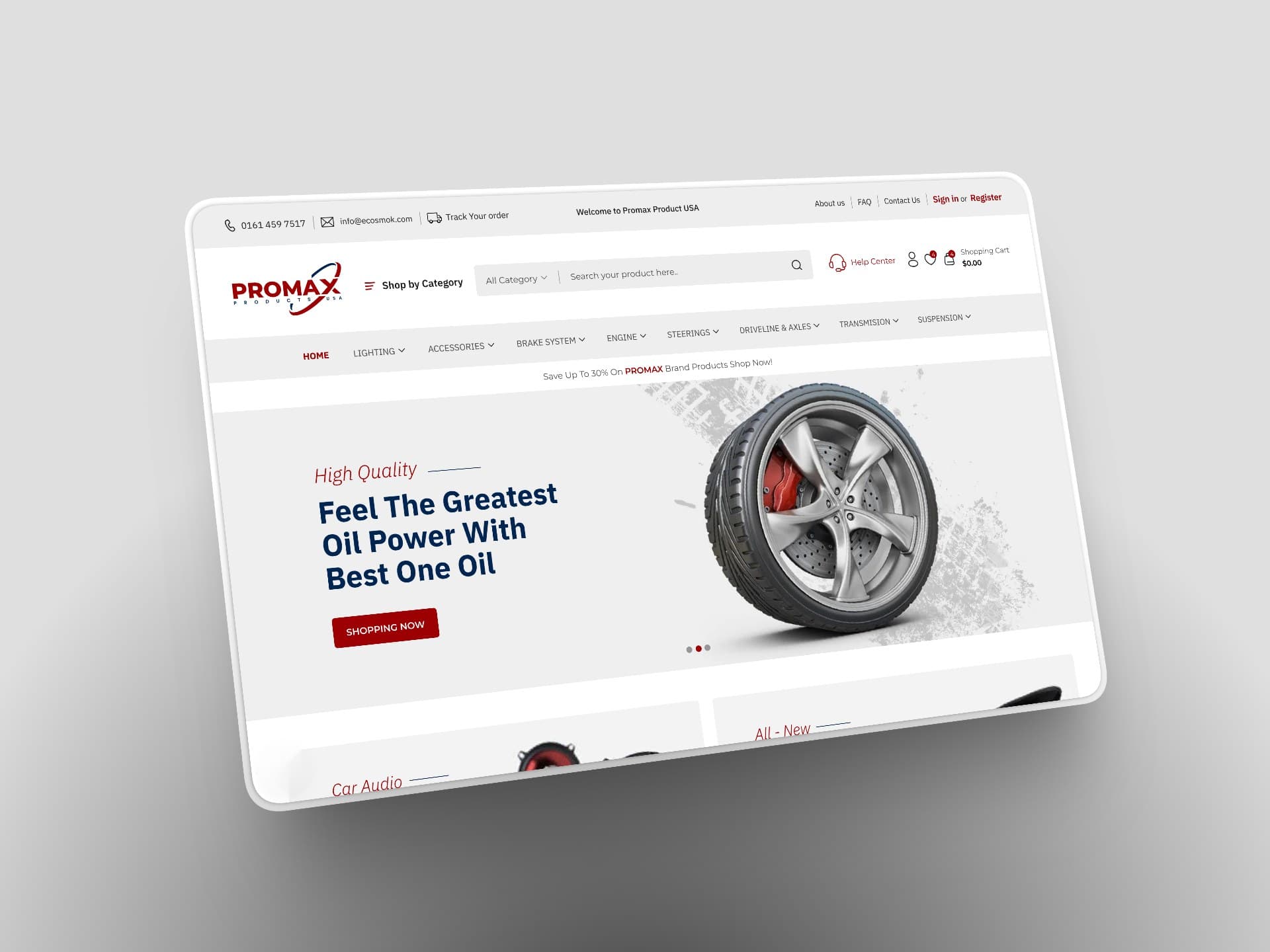
Open the project to see the interface and read how it was designed.
We design to these requirements. We do not hold certifications on your behalf, and this is not legal advice.
We build checkout so card details go straight to a PCI DSS compliant processor and never touch your servers, which keeps your own compliance scope small. Stores do not need to hold card data to take payment.
Order histories, saved vehicles and addresses are personal data. We design consent, deletion and export flows to accommodate GDPR and the UAE and Saudi data protection laws, depending on where your customers are.
Cross-border stores need tax-inclusive or exclusive pricing, customs fields and shipping restrictions on certain parts handled at checkout. Requirements differ by destination and should be confirmed with your own advisers.
The disciplines this kind of project usually draws on.
Also see: Fintech, Healthcare, Logistics, Real estate · Pricing
Yes. It needs a structured vehicle database and a mapping between each part and the vehicles it fits. If your supplier already provides fitment data we import it. If not, we scope how much can be sourced and how much has to be entered, because that mapping is usually the largest cost in the project.
Shopify handles smaller catalogues with simple fitment well. Past a few thousand SKUs with deep vehicle data, WooCommerce or a custom build gives you more control over search and data models. We recommend after seeing your catalogue, not before.
Yes, but the listings behave differently. Used parts are unique items with a single unit, a condition grade and their own photos, while new parts are stocked variants. We model them as separate listing types so stock and returns logic do not collide.
Through scheduled imports or an API from the supplier or your ERP, with a reconciliation report showing what changed. Where a supplier only offers spreadsheets, we build a repeatable import rather than a one-off upload.
Yes. Seller onboarding, listing and bulk upload tools, order handling and payout reporting are built as part of the platform. Commission rules and payout timing need to be agreed in the scope, since they change the payment architecture.
Tell us what you need to build and who it is for. The first consultation is free.