
 Logistics & Supply Chain Platform
Northline
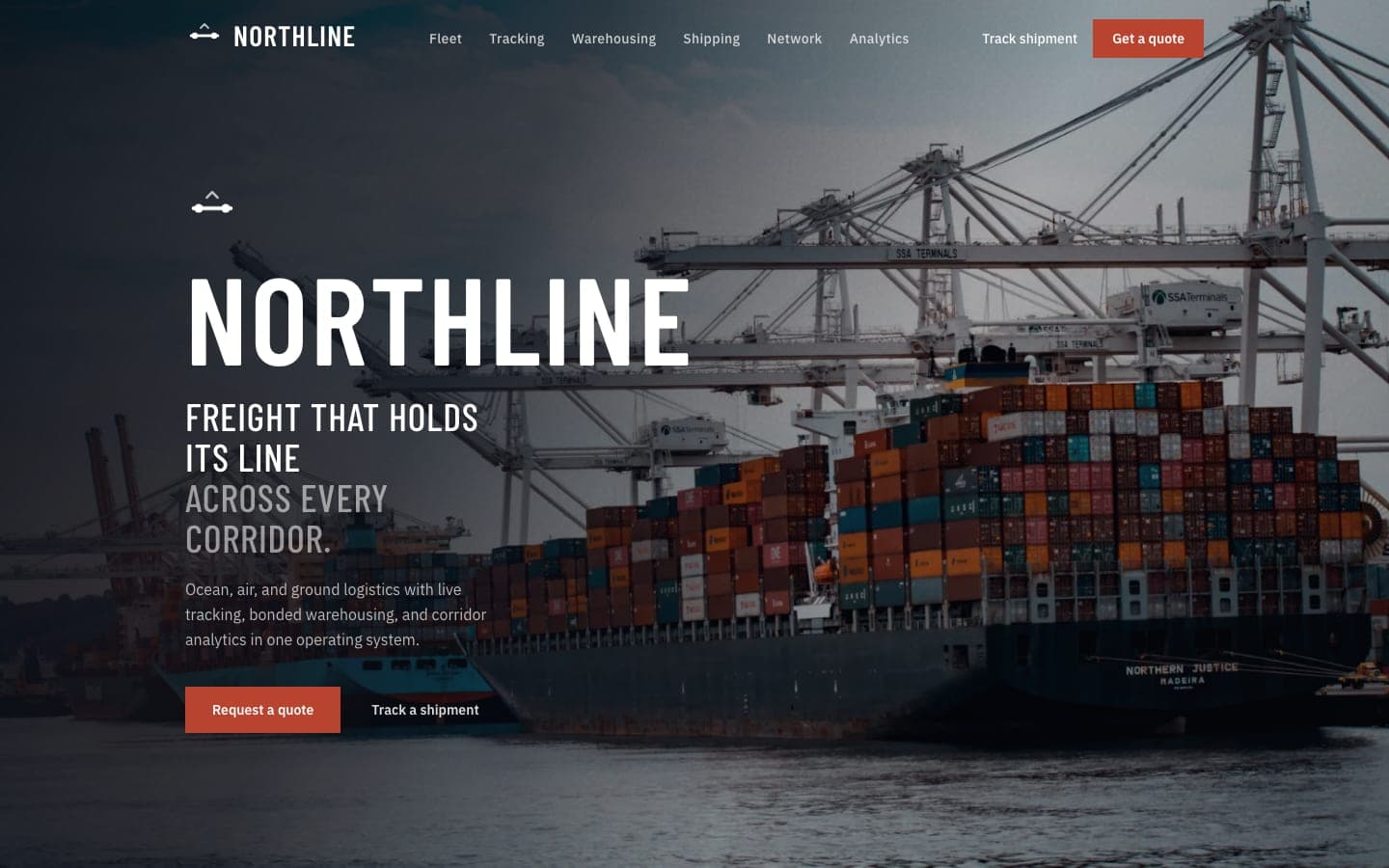
A logistics operating platform covering ocean, air and ground freight with live shipment tracking, bonded warehousing and corridor analytics.
Case study
A logistics software development company is judged by what happens at the exception, not the happy path. A shipment that arrives on time needs no software; the delayed container, the missed hand-off and the customer asking where their order is are where the system earns its place. We built Northline, a supply chain visibility platform, around those moments.
The constraints we plan for in the first call, because they decide the architecture.
Carriers, warehouses and customs each hold part of the picture. Operations staff open several tabs to answer one question, and customers phone because there is no single answer to give them.
A delay noticed after the customer notices it is a service failure. The system needs to raise exceptions as they develop, with the affected orders and a suggested next action attached.
Drivers and warehouse staff work in places with weak signal. Proof of delivery, scans and status updates must be captured on the device and sync when a connection returns, without losing or duplicating records.
Carrier feeds, EDI files, spreadsheets and manual entry all describe the same shipment differently. Normalising them into one status model is the hard part of any logistics build.
A single timeline per shipment and a map or list view across all of them, filtered by exception, route or customer, using one normalised status model.
Job assignment, route lists, proof of delivery with photo and signature, and offline capture that syncs safely when the signal returns.
Branded tracking links and notifications that answer where an order is, so the support team stops being the tracking system.
API and file-based connections to carriers and warehouse systems, with mapping tables and an error queue for records that fail to parse.
Open the project to see the interface and read how it was designed.
We design to these requirements. We do not hold certifications on your behalf, and this is not legal advice.
Cross-border shipments carry commercial invoices, packing lists and customs declarations. We build document handling and data fields to accommodate them; filing remains with your customs broker or carrier.
Tracking staff by GPS is personal data under GDPR and similar laws. We design tracking to run only during a shift and keep location history for a defined period.
Carriers and customers often get limited access to your system. We build role-based permissions so each partner sees only their own shipments.
The disciplines this kind of project usually draws on.
Also see: Auto parts, Fintech, Healthcare, Real estate · Pricing
Where they expose an API or a regular file export, yes. We list every system in discovery and rate each integration by how much the other side supports, since a carrier with no API means building around email or spreadsheets.
Yes. Scans, photos and status changes are stored on the device and uploaded when a connection is available, with conflict handling so a delayed upload does not overwrite newer information.
If a packaged product matches your workflow, buy it. Custom makes sense when your process is the advantage, when you need to combine several systems into one view, or when per-seat licences make packaged tools more expensive than owning the build.
Yes. We build tracking pages and notifications, either under your brand on your domain or as a portal where customers see only their own orders.
A focused first release such as tracking plus exception alerts can be scoped in weeks, while a platform covering dispatch, driver apps and several integrations is a multi-month programme. We phase the work so the first release is useful on its own.
Tell us what you need to build and who it is for. The first consultation is free.